
How to Read a Supplement Facts Label: A Step-by-Step Guide
How to Read a Supplement Facts Label: A Step-by-Step Guide
- Free US shipping
- Subscribe & Save 10%
- 30-day returns
The front of a supplement bottle is marketing. The back is where the facts live. Every dietary supplement sold in the US must carry a Supplement Facts panel, and once you know how to read it, you can compare products in seconds, spot what you are really paying for and avoid doubling up on nutrients. This guide walks through the label from top to bottom, using a real label from our store as an example.
Step 1: Serving size and servings per container
Everything else on the panel is based on one serving, so start here. A serving might be 1 gummy, 2 capsules or a dropperful. If a serving is 2 capsules, every amount listed below is for 2 capsules together, not for one.
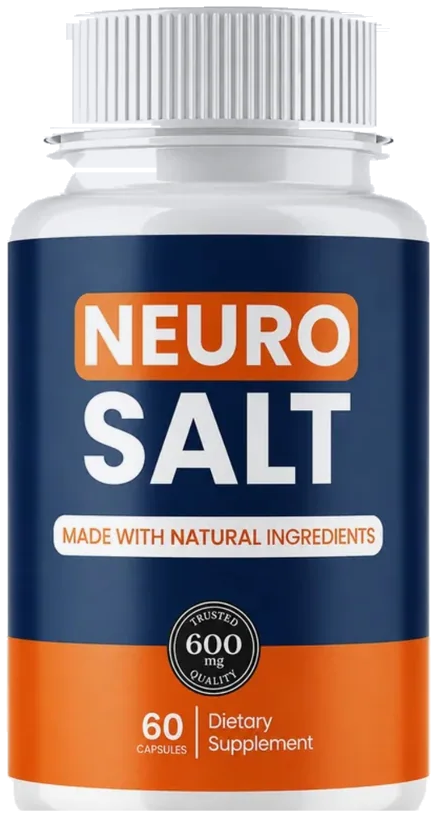
Servings per container tells you how long a bottle lasts at the suggested dose. For example, our Neuro Salt Capsules label lists a serving size of 2 capsules and 30 servings per container, so one 60-capsule bottle is a 30-day supply at $29.99, or about $1.00 per serving.
Step 2: Amount per serving and units
Each ingredient is listed with its amount per serving. The units matter:
- mg = milligram (one thousandth of a gram)
- mcg or µg = microgram (one thousandth of a milligram, so 1 mg = 1,000 mcg)
- IU = International Units, an older unit. Updated FDA labeling rules list vitamins A, D and E by weight, sometimes with IU in parentheses. For vitamin D, 1 mcg equals 40 IU, so 25 mcg = 1,000 IU.
Mixing up mg and mcg is one of the most common label mistakes shoppers make, so slow down when comparing two products.
Step 3: % Daily Value (%DV)
The %DV column shows how much one serving contributes toward the Daily Value, a reference amount set by the FDA. A few tips:
- 100% DV means one serving provides the full reference amount for the day.
- A dagger (†) means no Daily Value has been established. You will see this for herbs, amino acids and most specialty ingredients.
- Over 100% is common and not automatically a problem, but some nutrients, such as vitamin D, vitamin B6, niacin and folic acid, have a Tolerable Upper Intake Level. If you take several products, add up the amounts and ask your healthcare provider whether the total is right for you.
Step 4: The form of the ingredient
Good labels tell you the exact form in parentheses. On the Neuro Salt panel, for example, the first line reads "Vitamin B12 (as cyanocobalamin) 50 µg." Cyanocobalamin is the most common, stable form of vitamin B12 used in supplements. Other forms you may see include methylcobalamin for B12, cholecalciferol for vitamin D3, and magnesium citrate or oxide for magnesium. The form tells you what you are getting and makes comparisons fair.
For herbs, the label must name the part of the plant used, such as root, bark or leaf. Neuro Salt lists "Water Hyssop (Bacopa monnieri) Leaf Extract" and "Ginkgo biloba Leaf Extract," for instance. Curious about common botanicals? See our explainer on berberine, cinnamon and chromium.
Step 5: Proprietary blends
A proprietary blend groups several ingredients under one name with a single total weight. FDA rules require the blend's total amount and its ingredients listed in descending order by weight, but not the amount of each ingredient. Neuro Salt's label, for example, lists a 640 mg CEREBRX™ Blend followed by its eight ingredients.
Blends are common and legal. The trade-off is that you know the total and the order, but not the exact dose of each ingredient. If an exact amount of one ingredient matters to you, look for a product that lists it separately.
Step 6: Other ingredients
Below the panel you will find "Other ingredients": the capsule shell, binders, sweeteners, colors and flow agents. Neuro Salt lists gelatin, rice flour, magnesium stearate and silicon dioxide. This line is where you check for things you avoid. A gelatin capsule, for example, is not vegetarian, and gummies usually list sugar or another sweetener here. Major food allergens such as milk, soy, wheat or tree nuts must also be declared on the label.
Step 7: Directions, warnings and dates
Finally, read the suggested use, any warnings, the lot number and the "best by" or expiration date. Directions such as "take 2 capsules with a full glass of water" and "do not exceed the recommended dose" are part of using a product safely. Once your bottle is home, our guide on how to store supplements helps keep it fresh until that date.
Label checklist at a glance
| Label section | What it tells you | What to check |
|---|---|---|
| Serving size | How many units make one dose | Compare products per serving, not per capsule |
| Servings per container | How long the bottle lasts | Divide the price by servings for cost per day |
| Amount + units | The dose of each ingredient | mg vs mcg vs IU |
| % Daily Value | Share of the reference amount | Add up totals if you take several products |
| Form / plant part | Exactly what the ingredient is | "as cyanocobalamin", "leaf extract" |
| Proprietary blend | Total weight and order of ingredients | Individual amounts are not shown |
| Other ingredients | Shell, fillers, sweeteners | Gelatin, sugar, allergens |
Key takeaways
- Start with the serving size: every number on the panel is per serving.
- Watch the units: 1 mg = 1,000 mcg, and vitamin D is 40 IU per mcg.
- A dagger (†) means no Daily Value exists for that ingredient.
- The form in parentheses and the plant part tell you exactly what you are getting.
- Proprietary blends show a total, not individual doses.
- Check other ingredients for gelatin, sweeteners and allergens.
Frequently asked questions
What does the dagger symbol (†) mean on a Supplement Facts label?
It means a Daily Value has not been established for that ingredient. This is normal for herbs, amino acids and many specialty ingredients.
Is more than 100% Daily Value safe?
Often, yes, but it depends on the nutrient. Some have an upper limit, so if you take more than one product, add up the totals and check with your healthcare provider.
What is the difference between a Supplement Facts and a Nutrition Facts label?
Nutrition Facts appear on foods. Supplement Facts appear on dietary supplements and can list ingredients without a Daily Value, show the plant part used, and include proprietary blends.
Want more ways to judge a product before you buy? Read How to Choose a Quality Supplement, then put your new label skills to work.
Browse our capsule supplements
Talk to your healthcare provider before starting any supplement, especially if you are pregnant, nursing, taking medication or have a medical condition.
- Free US shipping
- Subscribe & Save 10%
- 30-day returns